A Training Week Exploring the Regional Impacts of Energy Challenges with E.SENSE
A Training Week Exploring the Regional Impacts of Energy Challenges with E.SENSE
From 26 to 29 October 2026, scholarship recipients and PhD students with a scientific background participating in the E.SENSE programme took part in a training week dedicated to the regional impacts of energy challenges.
Through scientific presentations, practical workshops and interdisciplinary approaches, the week enabled them to explore the environmental, economic, geopolitical and social dimensions of the energy transition.
-
Understanding Resource Criticality
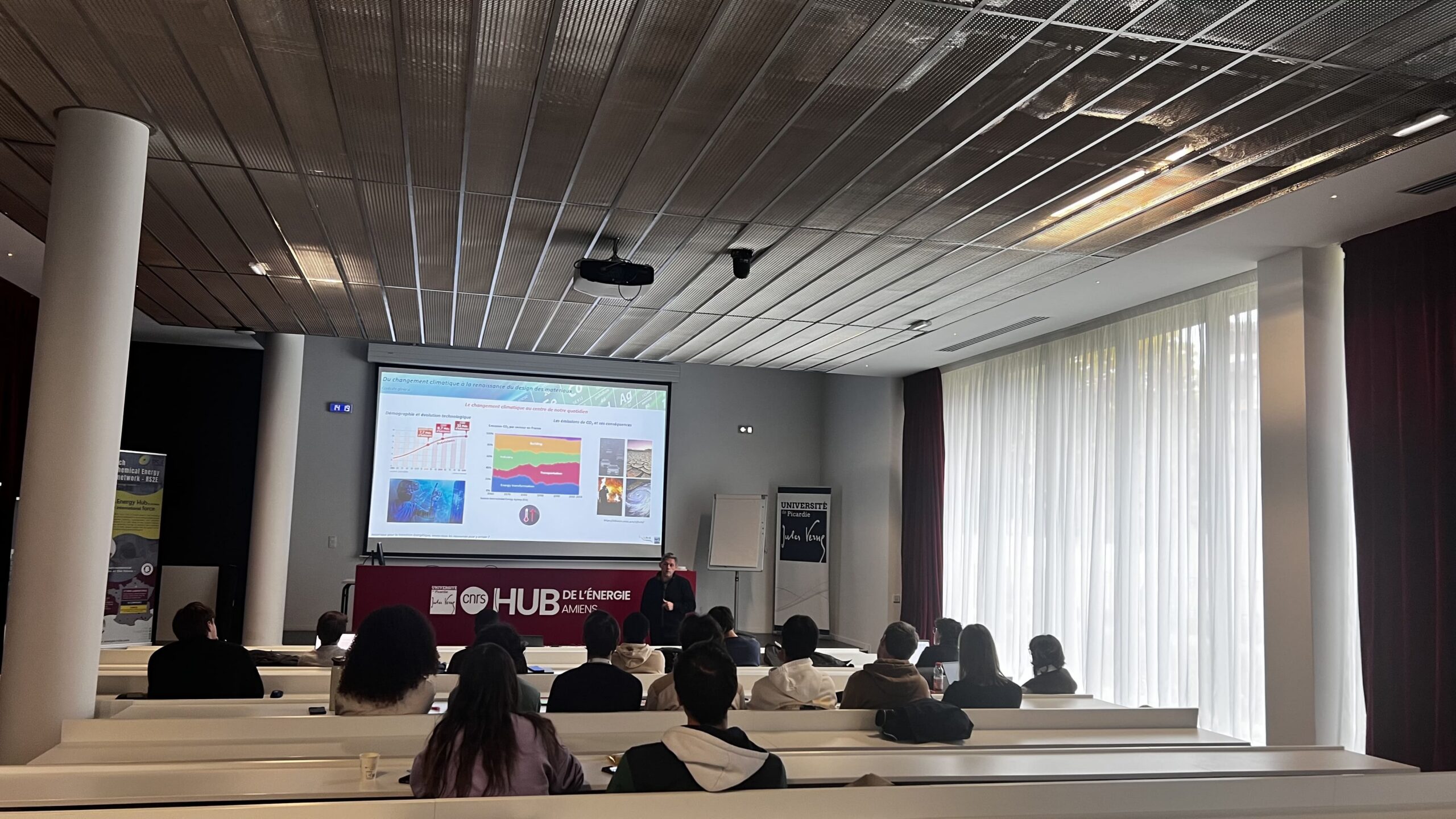
The week began with a presentation by Matthieu Becuwe on resource criticality.
How can we ensure the availability of the resources needed for the energy transition? What challenges and risks are associated with their supply and use?
These questions encouraged participants to reflect on dependencies on raw materials, supply chain tensions and the challenges associated with the development of current and future energy technologies. The presentation explored the economic, geopolitical and environmental dimensions of the energy transition, while providing additional perspectives to complement the research conducted by the students and PhD candidates.
-
Assessing Environmental Impacts and Discovering Eco-design
On Tuesday, 27 October, participants deepened their understanding of the environmental impacts of products and processes through two complementary approaches: Life Cycle Assessment (LCA) and eco-design.
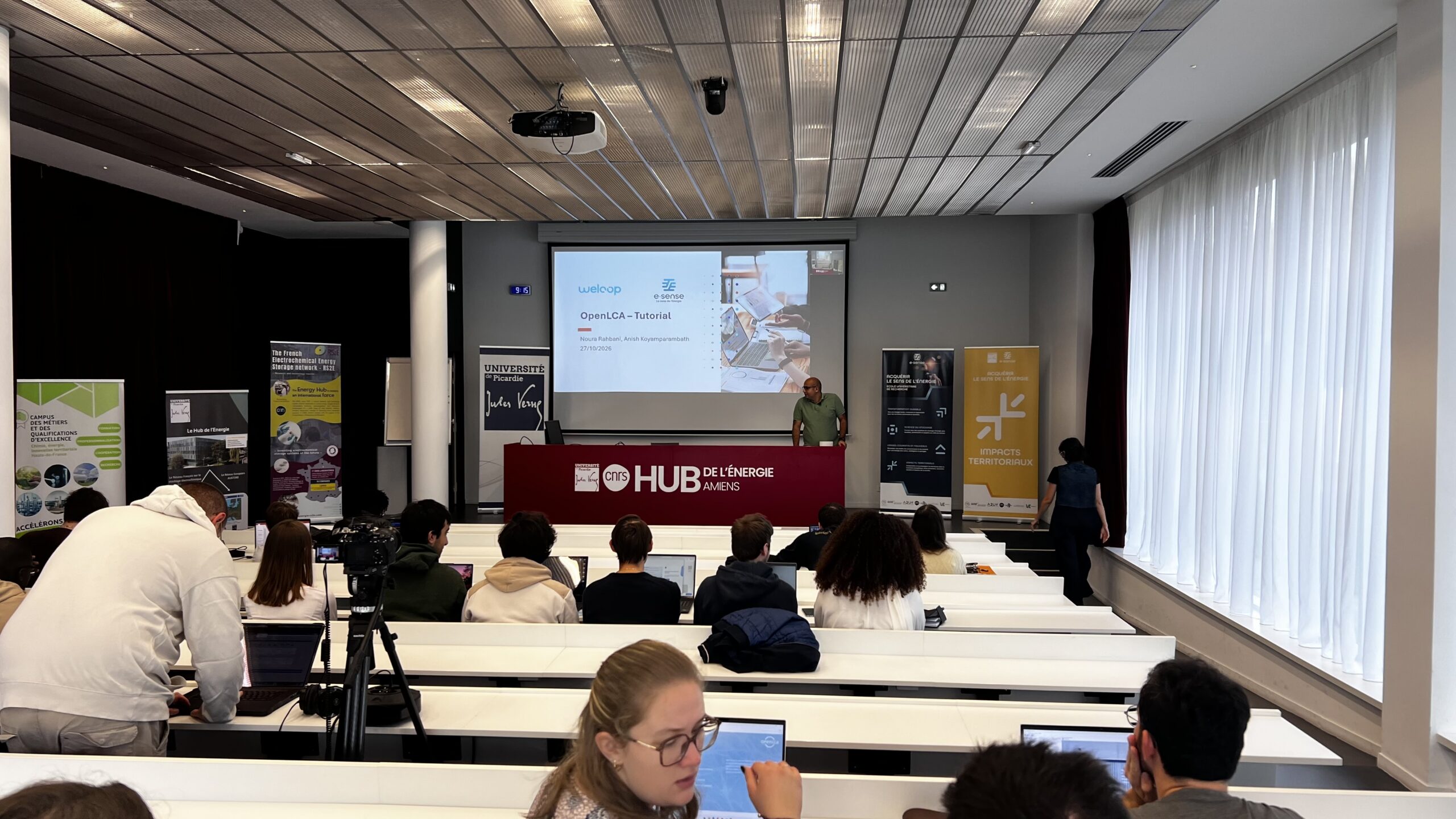
After completing an introductory e-learning module on LCA offered as part of E.SENSE, students and PhD candidates were able to put their knowledge into practice by exploring OpenLCA, software used to model and assess environmental impacts throughout the life cycle of a product or system.
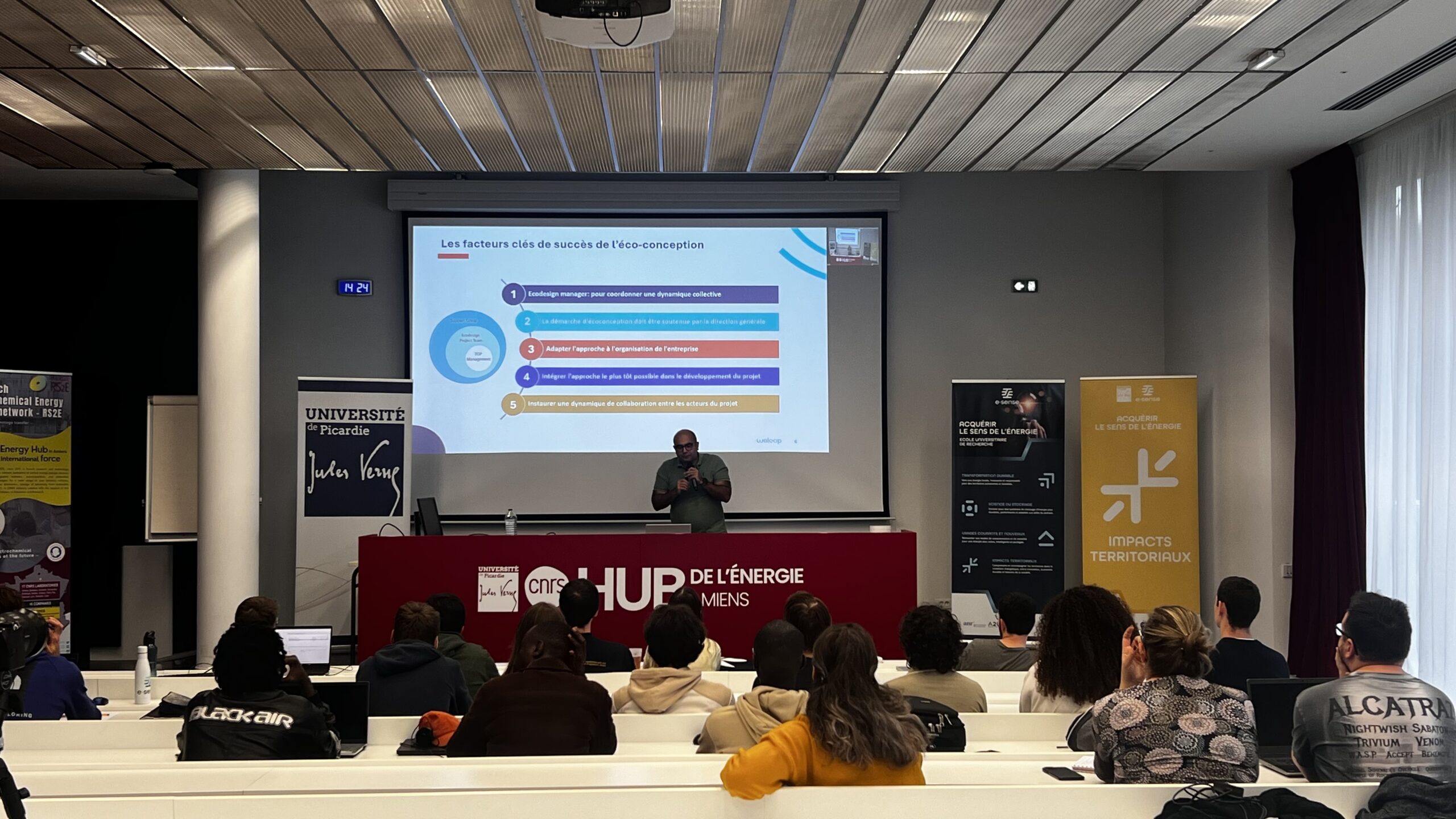
The afternoon was devoted to eco-design. Through a collaborative workshop, participants discovered how to integrate environmental considerations from the earliest stages of product or process design. Discussions focused in particular on the consequences of technical choices and on identifying opportunities for improvement to develop more sustainable solutions.
-
Learning Differently: Games and Social Life Cycle Assessment
On Wednesday, 28 October, participants continued exploring energy challenges by discovering new educational and methodological approaches.
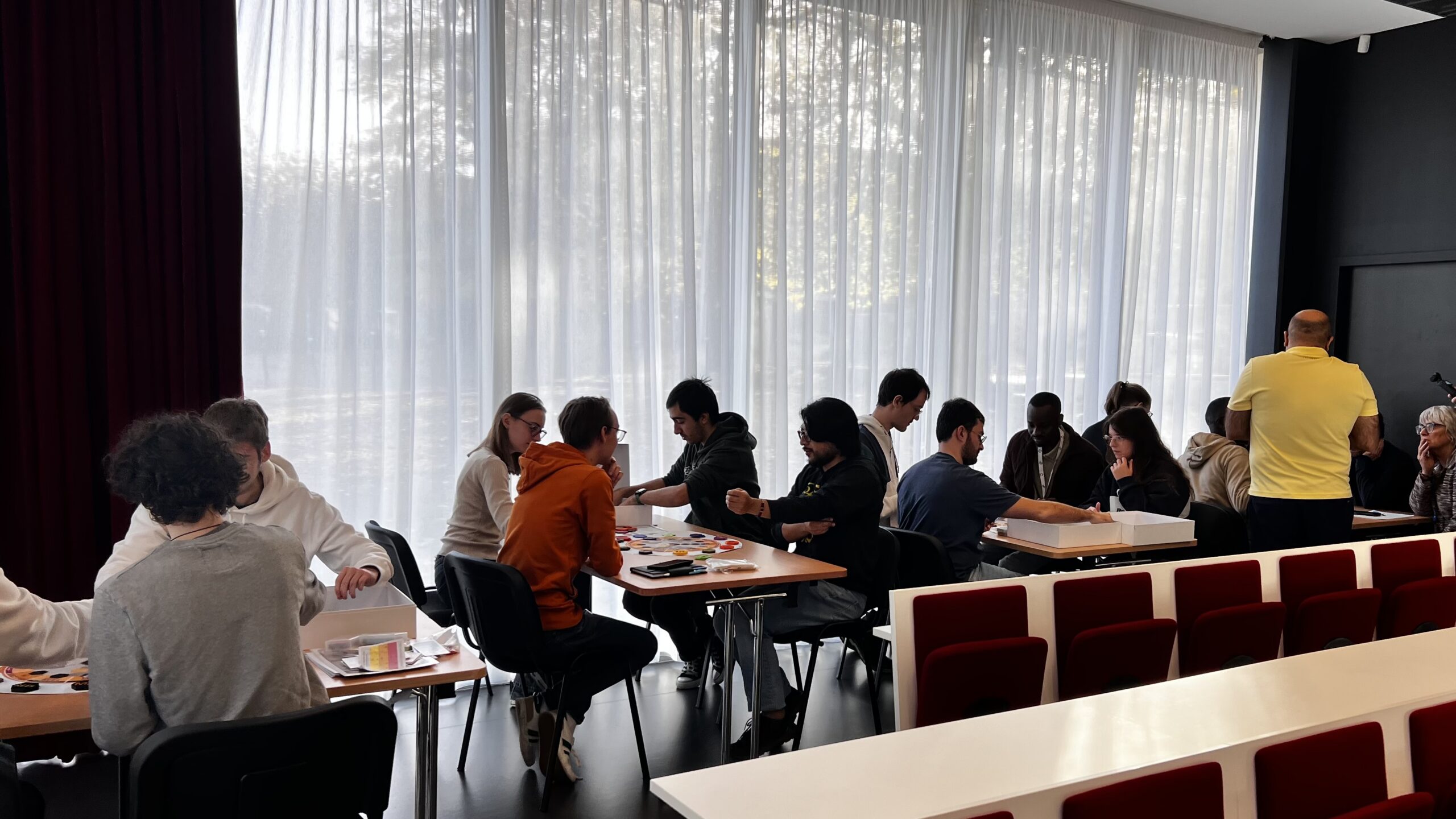
Building on the presentation on resource criticality, they took part in In the Loop, a game dedicated to this topic. Players had to achieve various objectives while taking into account the limitations of available resources and events that could affect their progress, particularly in environmental, geopolitical, societal and economic terms.
This game-based learning approach encouraged participation and discussion around complex issues, while illustrating the interdependencies that characterise energy systems.
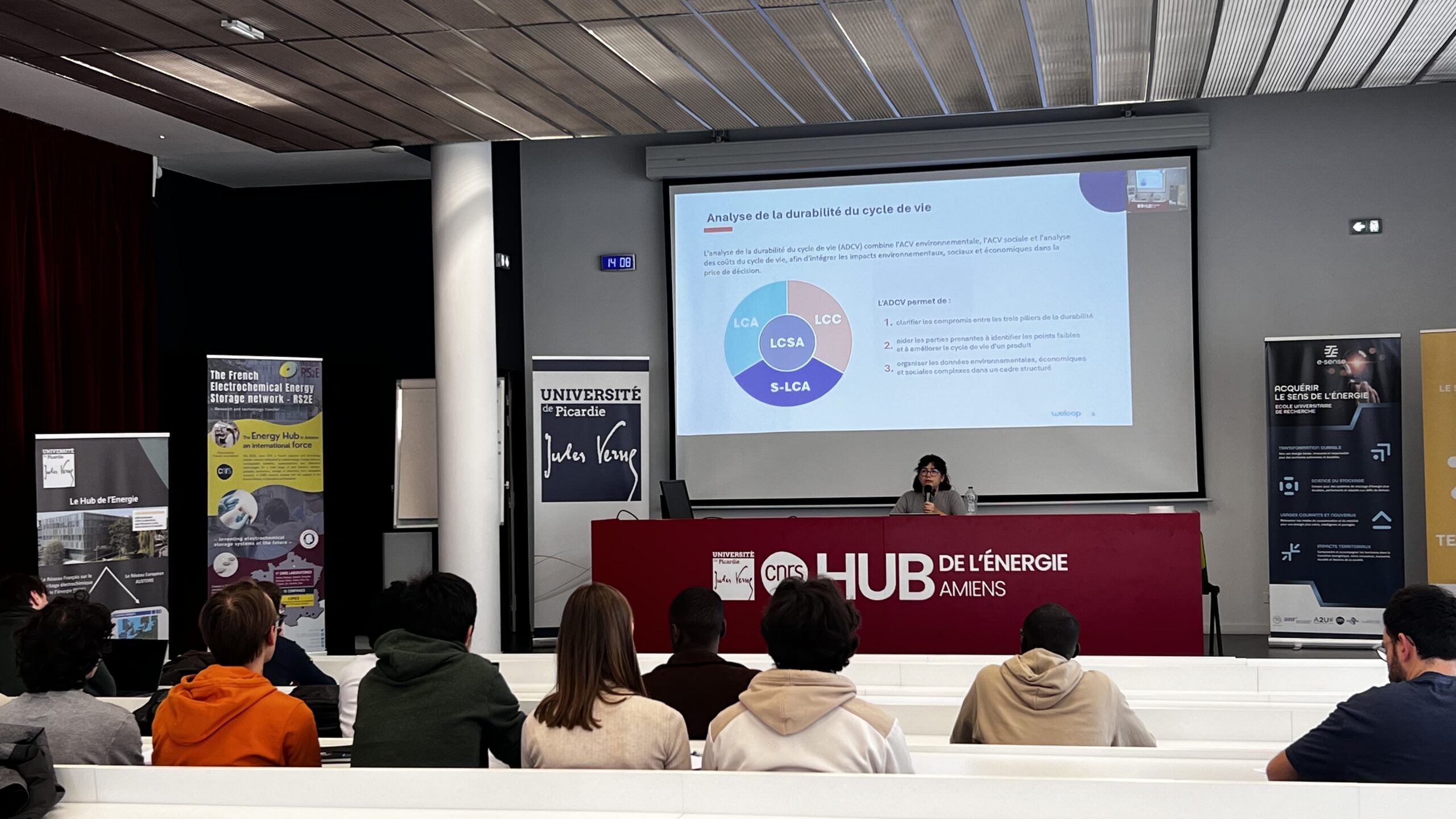
The day continued with an introduction to Social Life Cycle Assessment (S-LCA). This method makes it possible to assess the social and socio-economic impacts of a product, service or project throughout its value chain. Beyond environmental impacts alone, this approach highlights the importance of considering human and social dimensions when analysing energy transitions.
These sessions were delivered with the support of our partner WeLOOP.
Broadening Perspectives: Digital Resources, Innovation and Energy Sociology
On Thursday, 29 October, the training week continued with several sessions designed to broaden participants’ perspectives on energy systems and their implications for local and regional areas.
-
Digital Resources: Making Use of A2U Tools
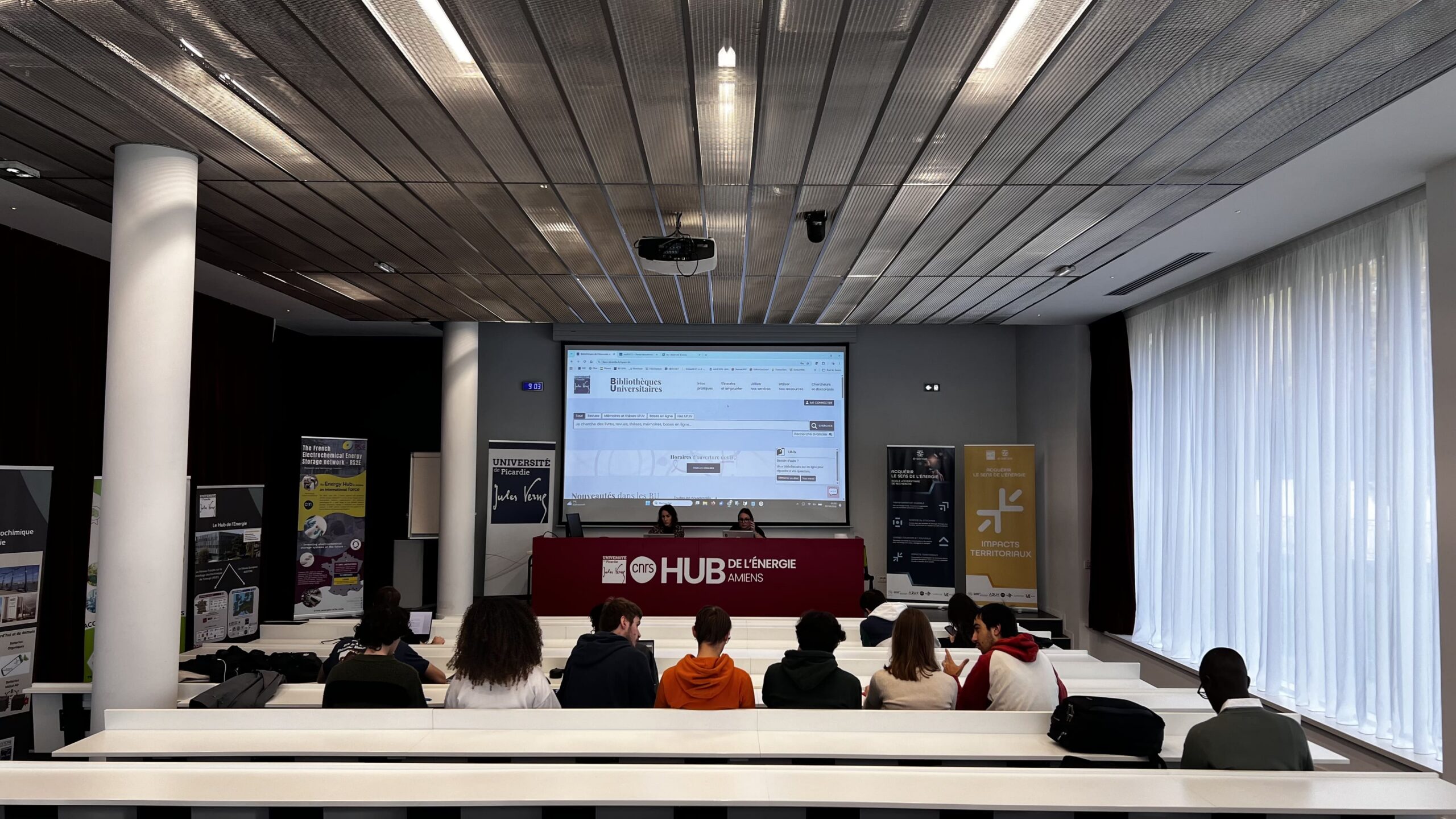
A session dedicated to the digital resources available through the A2U Alliance introduced participants to the tools and resources they can use within their university environment.
Many thanks to Virginie and Aurélie for their contribution.
-
Intellectual Property and Entrepreneurship: From Research to Innovation
Through a session delivered by our partner SATT Nord, students and PhD candidates discovered the mechanisms used to bring public research results to market and turn them into practical innovations.
Topics covered included: an introduction to SATT Nord’s missions, research valorisation, intellectual property and an overview of deep-tech start-ups.
This session reflects the ambitions of the E.SENSE project: to bring research, education and the socio-economic world closer together in order to foster the emergence of innovations that support the energy and environmental transitions.
Many thanks to Oumaira and Audrey for their contribution.
-
Energy Sociology: Understanding Practices and Uses
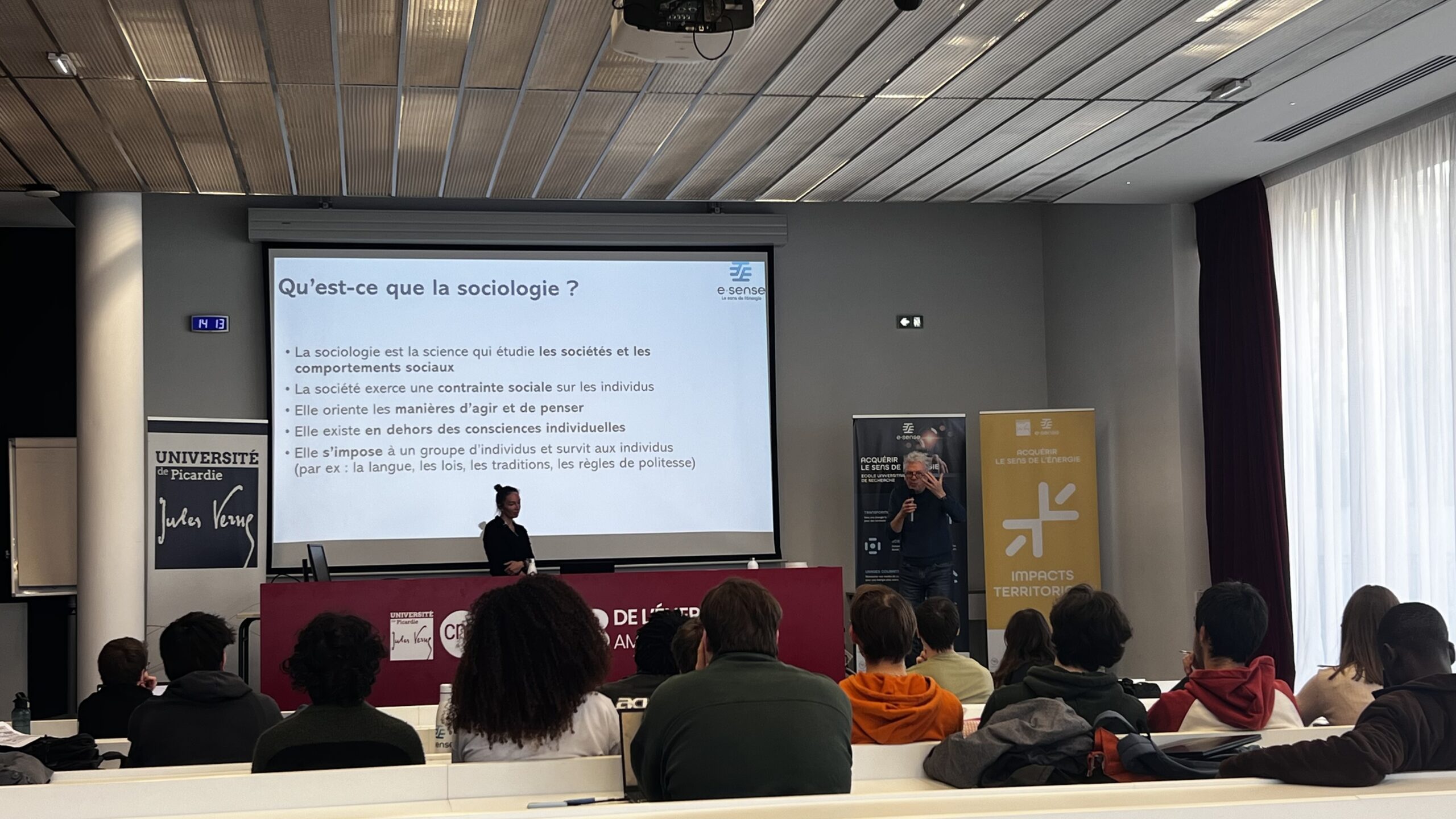
The training week also incorporated a sociological perspective on energy challenges.
Participants first explored the foundations of sociology and how this discipline studies human behaviour, social relationships and the mechanisms that shape our ways of life. This introduction then enabled them to focus more specifically on energy sociology, exploring how everyday uses, practices and social representations influence our relationship with energy.
This approach highlights the fact that energy transitions do not rely solely on technological innovation: they also depend on behaviours, organisations and social dynamics.
A Cross-disciplinary Approach to Energy Transitions
Throughout this training week, E.SENSE offered students and PhD candidates from A2U institutions with a scientific background a programme combining complementary disciplines and methods, including environmental sciences, Life Cycle Assessment, eco-design, the geopolitics of resources, innovation, intellectual property and energy sociology.
This diversity of approaches helps develop a comprehensive understanding of energy challenges and their implications for local and regional areas.
It reflects the ambition of the E.SENSE project to foster dialogue between disciplines, strengthen interdisciplinary skills and support students and PhD candidates in understanding the scientific, economic, environmental and social challenges of the energy transition.
Many thanks to all the speakers and partners for their contributions, and to the students and PhD candidates for their participation in this training week.